Five things quietly costing Sydney landlords money

The expensive problems in a rental are rarely dramatic. They are quiet. A vacant week here, a deduction never claimed there, a rent review that slips past at renewal. None of them look urgent. That is exactly how they get expensive.
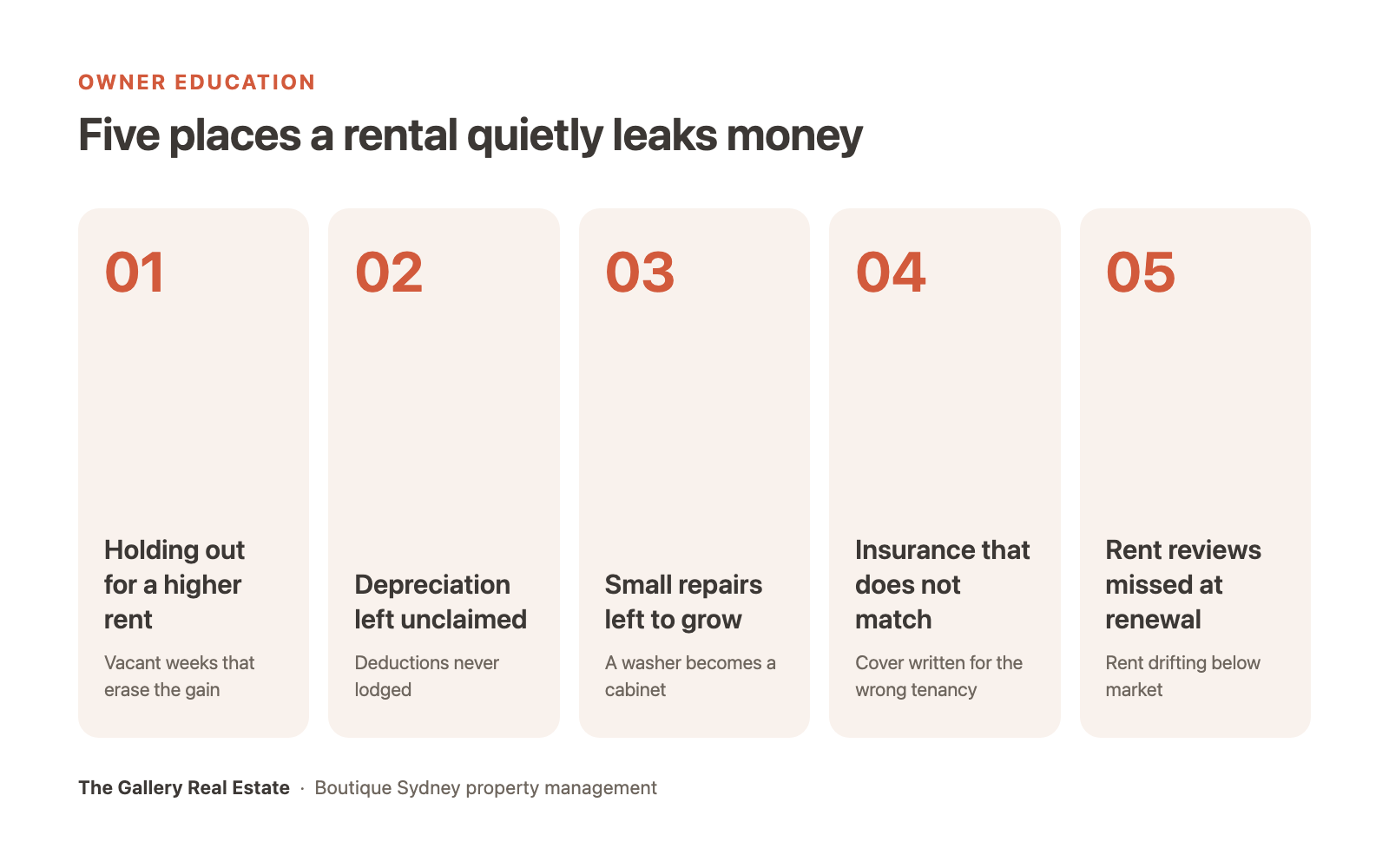
01. Holding out for a higher rent
This one hides inside what feels like good business. An extra $30 a week sounds worth waiting for. Over a 12 month lease it adds up to $1,560. That is the whole prize. Now weigh it against the cost of waiting. At a $900 weekly rent, one vacant week erases seven months of that gain. Two vacant weeks and the hold-out has lost money outright.
The better play is usually to price for the tenant pool, lease quickly to a quality tenant while interest is at its peak, then review at renewal with the market in hand. The strongest applications almost always arrive in the first week.
02. Depreciation left unclaimed
Your building and its fittings lose value on paper every year. The tax office lets you claim that decline against your rental income. It is money already spent. Most owners still leave it on the table because claiming it needs a depreciation schedule, prepared once by a quantity surveyor, which then works for the life of the property. A good schedule is often worth thousands back each year and usually pays for itself many times over.
Older properties count too. Appliances, flooring and recent works usually hold claimable value even when the building itself is past its claim period. Most owners assume they miss out. Most are wrong.
03. Small repairs left to grow
A dripping tap is a washer. Left alone it is a swollen vanity cabinet and a plumber at emergency rates. Deferred maintenance rarely stays small. It also carries a second cost that never shows up on an invoice: good tenants notice. A tenant who reports something and watches it sit unresolved is a tenant more likely to leave at the end of the lease.
Vacancy is the most expensive leak of all. Most of the others feed it.
Not sure which of these is quietly running in your property? A quick call sorts it in one sitting.
04. Insurance that does not match the tenancy
A standard home policy is not landlord insurance. Rent default, tenant damage and liability need cover written for how the property is actually tenanted. The details matter. Cover taken out years ago may no longer match the current lease, the current rent or the way the property is being used. The gap only shows itself at the worst possible moment, which is when a claim is on the table. A short review at renewal time keeps the policy honest.
05. Rent reviews missed at renewal
NSW allows one rent increase per 12 months, which makes each review a scarce opportunity. Miss it at renewal and the property drifts below market, quietly, a little more each year. The eventual catch-up then feels steep to a good tenant who has done nothing wrong, which is how sound properties end up choosing between under-market rent and an avoidable vacancy.
The fix is not aggression. It is rhythm. A measured review at every renewal, supported by current market evidence, keeps the rent fair in both directions and keeps the conversation with the tenant easy.
The renewal-time check
- Rent reviewed against current market evidence
- Depreciation schedule in place and up to date
- Outstanding small maintenance booked, not parked
- Landlord insurance current and matched to the tenancy
- Lease dates and increase timing mapped for the year ahead
What we handle for you
Most of these leaks are not hard to fix. They are just easy to forget, which is why they respond to management rather than effort. We price to lease quickly to quality tenants and review at renewal. We triage maintenance so small jobs stay small. We run the renewal calendar so a rent review is never missed. We prompt the depreciation and insurance conversations at the right moments, then point you to the right specialists. You make the decisions. We make sure they land on time.
A note. This article is general information only, not financial, tax or insurance advice. Depreciation and insurance outcomes depend on your circumstances, so speak to your accountant or insurer before acting.
Want a second set of eyes on all five?
If you would like a calm read on where your property sits across these five, book a quick call with Thomas.